
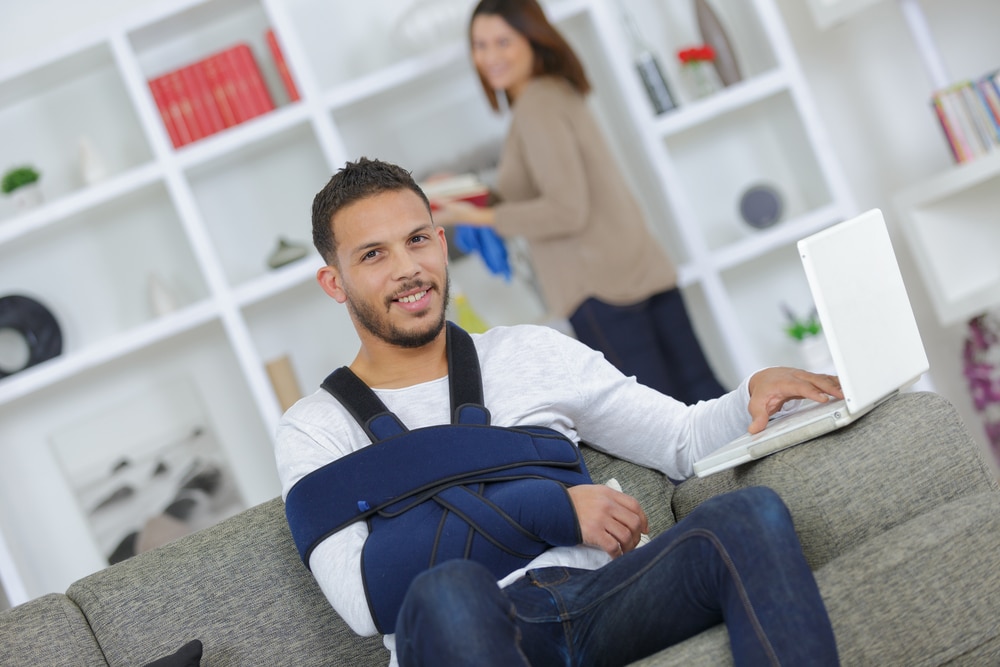
Car accidents can injure bones, joints, muscles, tendons, and ligaments, even when the collision doesn’t initially seem severe. Neck and back injuries are common, but the force of a crash may also damage your shoulders, knees, hips, wrists, or ankles.
Union County Orthopaedic Group provides orthopedic care for auto injuries in Linden, Clark, and Union, NJ. Its physicians include board-certified orthopedic surgeon Dr. Christopher R. Ropiak, who completed additional training in orthopedic trauma and sports medicine.
Explore common orthopedic injuries associated with car accidents below.
Neck and Back Injuries
A sudden impact can force your neck and spine to move beyond their normal range. This may strain muscles and ligaments or irritate discs, joints, and nerves.
Possible symptoms include:
- Neck or lower back pain
- Stiffness
- Muscle spasms
- Headaches
- Tingling or numbness
- Pain that travels into an arm or leg
Some issues appear immediately, while others become more noticeable after the body’s initial stress response subsides. New weakness, loss of sensation, difficulty walking, or changes in bladder or bowel function require urgent medical attention.
Shoulder Injuries
Seat belts greatly reduce the risk of severe injury, but the force placed across the shoulder during a collision can still cause bruising, soreness, or other damage.
Car crashes might contribute to shoulder sprains, dislocations, fractures, rotator cuff injuries, or collarbone damage. You may experience pain when lifting your arm, weakness, swelling, or reduced motion.
Knee and Leg Injuries
Your knees can strike the dashboard, steering column, or another part of the vehicle. A bent or twisted leg may also damage the meniscus or supporting ligaments.
Common knee and leg injuries include:
- Ligament sprains or tears
- Meniscus injuries
- Kneecap fractures
- Hip or thigh injuries
- Ankle sprains
- Broken bones
A sprain affects the ligaments around a joint, while a strain involves a muscle or tendon. Fractures can also occur in car accidents and might require casting, bracing, or surgery depending on the bone involved and the severity of the break.
Hand, Wrist, and Arm Injuries
Hands, wrists, and arms may be injured by airbags, broken glass, the steering wheel, or the instinct to brace for impact. These forces can cause fractures, sprains, dislocations, cuts, or tendon damage.
Pain, bruising, swelling, weakness, and difficulty gripping objects should be evaluated, especially if symptoms don’t begin to improve.
Why Prompt Evaluation Matters
Adrenaline and shock can temporarily mask pain after a crash. Seeking care helps identify injuries that aren’t obvious from the outside and creates a record of your symptoms, examination findings, and recommended treatment.
Get Care for an Accident-Related Injury
Pain that continues, worsens, or limits movement shouldn’t be ignored after a collision. Union County Orthopaedic Group can evaluate orthopedic injuries, coordinate care, and, when appropriate, communicate with your insurance company.
Contact us today to arrange an assessment. Reach the Linden office at (908) 486-1111, the Clark office at (732) 388-1761, or the Union office at (908) 486-4400.