
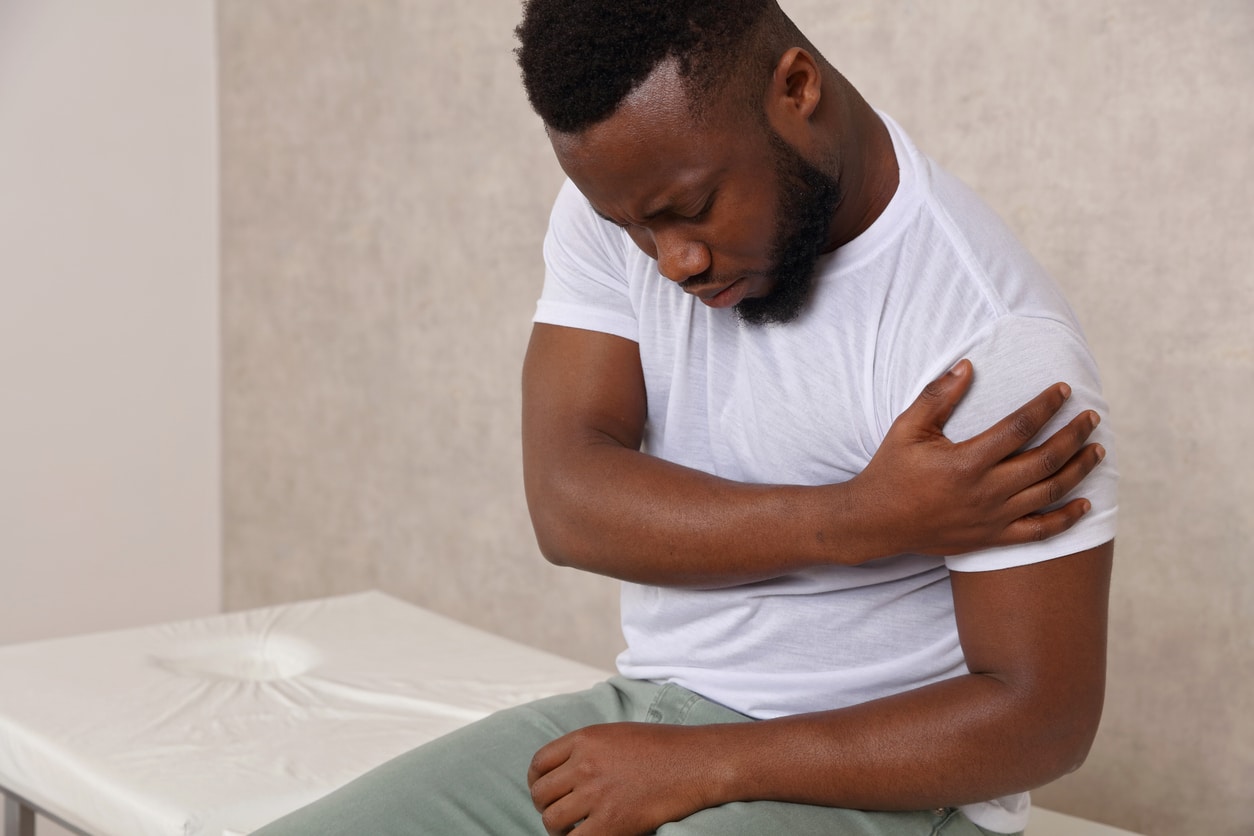
A rotator cuff tear doesn’t always require surgery. Many people can reduce pain and regain useful shoulder function through nonsurgical care, depending on the tear’s size and cause, symptom severity, strength, activity level, and overall health. However, symptom improvement doesn’t necessarily mean the tendon has physically reattached to the bone.
Union County Orthopaedic Group provides care for rotator cuff tears and other shoulder conditions in Linden, Clark, and Union, NJ. The team includes Mina Abdelshahed, MD, a board-certified orthopedic surgeon who completed fellowship training in shoulder and elbow surgery. His work includes treating partial and full-thickness rotator cuff tears, as well as arthroscopic and complex rotator cuff repairs.
What Does Nonsurgical Rotator Cuff Treatment Involve?
The main goal is to decrease pain while keeping or restoring shoulder movement and strength. Depending on your tear and health history, treatment can include:
- Avoiding or modifying movements that aggravate your shoulder
- Physical therapy to increase flexibility and strengthen supporting muscles
- Anti-inflammatory medication when medically appropriate
- Corticosteroid injections in selected cases
Physical therapy can be especially important because improving the strength and coordination of the muscles around the shoulder may reduce discomfort and help preserve useful function despite the tear.
Does the Tear Actually Heal on Its Own?
This is where the distinction between healing and feeling better matters. Some rotator cuff tears, especially full-thickness tears that have pulled away from the bone, generally do not reliably reattach to their normal insertion without surgical repair.
You can still have meaningful improvement without anatomical healing, though. Pain may decrease, motion can improve, and you may return to many activities even while the tear remains visible on imaging.
Some tears can enlarge over time, which is another reason follow-ups matter when weakness or discomfort persists.
When Might Surgery Be Recommended?
Surgery becomes more likely when a tear causes substantial weakness, follows a significant traumatic injury, is relatively large, or continues to interfere with daily life despite months of nonsurgical treatment. Your age, activity demands, tendon quality, and personal goals also influence the decision.
The important question isn’t simply whether an MRI shows a tear. It’s how the injury affects your strength, function, pain, and ability to do what you need to do.
Talk With a Shoulder Specialist About Your Options
Some rotator cuff tears respond well to conservative care, while others respond better to surgical repair. Union County Orthopaedic Group treats shoulder injuries in Linden, Clark, and Union, NJ. Contact us for an evaluation of ongoing pain or weakness.
- Linden Office: (908) 486-1111
- Clark Office: (732) 388-1761
- Union Office: (908) 486-4400