
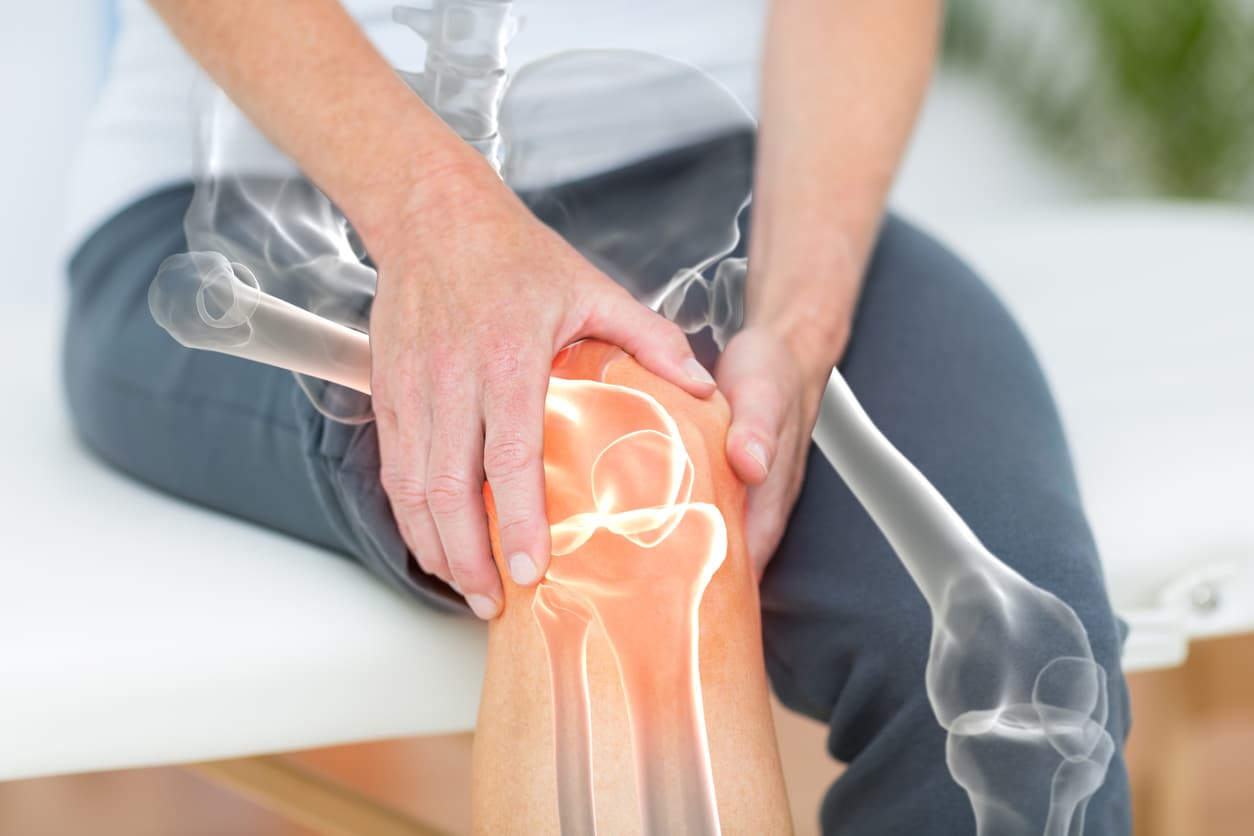
Knee replacement recovery usually progresses in stages, with the first 12 weeks centered on controlling pain and swelling, restoring motion, rebuilding strength, and gradually returning to everyday activities. Your exact timeline will depend on your health, the type of replacement, and how your knee responds after surgery. Treatments at Union County Orthopaedic Group include total and partial knee replacement, including unicondylar knee replacement.
Serving Linden, Clark, and Union, NJ, Union County Orthopaedic Group has cared for the community since 1966. The team includes David E. Rojer, MD, a board-certified, fellowship-trained orthopedic surgeon who focuses on hip and knee reconstruction. He has performed thousands of hip and knee replacements during his years in private practice.
The First Two Weeks After Knee Replacement
Walking generally begins very soon after surgery, often with a walker or crutches. You’ll also start exercises that help restore knee motion and strengthen the muscles around the joint. Dr. Rojer’s joint replacement program includes early ambulation with physical therapy.
Pain, stiffness, bruising, and swelling are expected during this early stage. Your care team will provide instructions for medication, incision maintenance, activity, and exercises. Moving regularly is important, but doing too much too quickly can leave your knee more swollen and sore.
Weeks 3-6: Building Mobility and Independence
During the next several weeks, walking usually becomes easier, and your reliance on an assistive device may decrease. Physical therapy continues to work on bending and straightening the knee, balance, strength, and normal walking mechanics.
Many people can resume more daily activities within a few weeks. Driving may also become possible once you can safely control the vehicle and are no longer taking opioid pain medicine, but your surgeon should clear you first.
You might feel considerably better by this stage without feeling completely recovered. Swelling, fatigue, and stiffness can still fluctuate from day to day.
Weeks 7-12: Regaining Strength and Endurance
By the second and third months, the emphasis shifts toward stronger muscles, greater endurance, and smoother movement. Walking longer distances and handling stairs may become more comfortable as your strength improves.
You can gradually return to low-impact activities based on your surgeon’s instructions. Recovery isn’t finished at week 12, though. Some improvements continue for months, particularly with strength, endurance, and lingering swelling.
Your own progress matters more than matching a rigid weekly milestone. Staying consistent with the rehabilitation plan and discussing new or worsening symptoms with your orthopedic team will help keep recovery moving in the right direction.
Plan Your Knee Replacement Care in Union County, NJ
A clearer picture of recovery can make knee replacement easier to prepare for. David E. Rojer, MD, and the Union County Orthopaedic Group team treat patients in Linden, Clark, and Union, NJ. To discuss knee pain or replacement surgery, contact us today.
- Linden Office: (908) 486-1111
- Clark Office: (732) 388-1761
- Union Office: (908) 486-4400